Frequent Sneezing, Congestion, Itchy Rash or Chronic Cough — Not Always Just a Cold
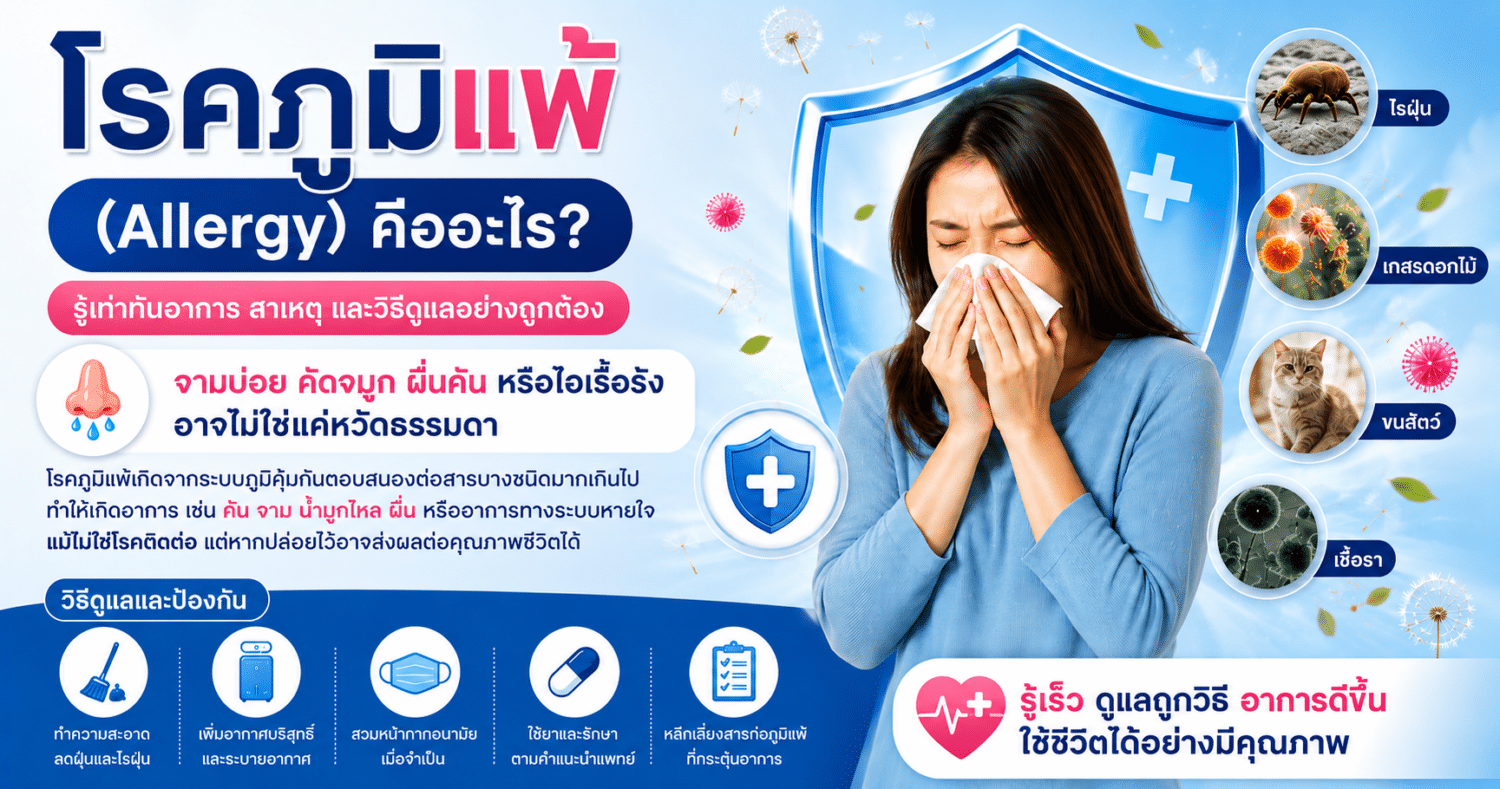
Many people experience sneezing, a blocked nose, a runny nose, an itchy rash or an on-and-off chronic cough and assume it is just a common cold. In reality, these can be signs of an allergy, one of the most common health issues in both children and adults.
Allergies are becoming more common worldwide, including in Thailand. Environmental factors, air pollution and changing lifestyles may all play a part.
Although allergies are not contagious, leaving them chronic or frequently flaring can affect quality of life, sleep, study and work.
What Are the Symptoms of Allergy?
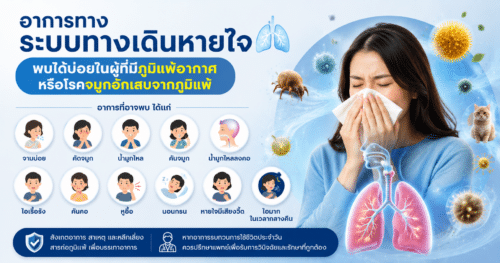
1. Respiratory symptoms
- Frequent sneezing
- Nasal congestion
- Runny nose
- Itchy nose
- Post-nasal drip
- Chronic cough
- Itchy throat
- Ear fullness
- Snoring
- Wheezing
- Coughing more at night
2. Skin symptoms
- Itchy rash
- Dry skin
- Red rash
- Atopic dermatitis
- Recurrent hives
3. Digestive symptoms
- Abdominal pain
- Nausea
- Vomiting
- Loose stools
4. Other associated symptoms
- Headache
- Fatigue
- Reduced concentration
- Disturbed sleep
- Not feeling refreshed on waking
What Causes Allergies?
Genetics
People with family members who have allergies may be more likely to develop them.
Environmental allergens
- Dust mites
- Household dust
- Mould
- Pollen
- Animal dander
- Cockroaches
- Certain foods
- Certain medicines
Other triggers
- Weather changes
- PM2.5 dust
- Cigarette smoke
- Incense smoke
- Air pollution
- Strong odours
Why You Should Not Let Allergies Become Chronic
Leaving symptoms chronic can affect long-term health, and some people may develop complications such as:
- Sinusitis
- Middle ear inflammation
- Nasal polyps
- Asthma
- Poor-quality sleep
For those with itchy or allergic eyes, frequent rubbing may cause irritation or affect eye health.
Finding the Cause of Your Allergy
Knowing the true cause helps you avoid triggers appropriately. A doctor may consider:
Skin Prick Test
Tests the skin’s reaction to certain allergens.
Blood test
Assesses the body’s response to certain types of allergens — the right method depends on age, symptoms and the doctor’s judgement
Treating Allergies
1. Avoid allergens
Once the cause is known, avoiding triggers is a key part of care.
2. Use medicines as directed by your doctor
- Oral medicines
- Nasal sprays
- Inhalers
- Eye drops
- Skin creams
3. Look after overall health
- Exercise regularly
- Get enough sleep
- Eat a healthy diet
- Reduce exposure to smoke and pollution
4. Manage related conditions
- Sinusitis
- Asthma
- ObesityCan allergies be completely cured?Allergies involve the immune system’s response. Treatment focuses on controlling symptoms, reducing flare-ups and improving quality of life.Are allergies contagious?
No — allergies are not contagious and cannot spread from person to person.
Can children have allergies?Yes. Children can develop allergies from a young age, especially those with a family history of allergies.
Can PM2.5 dust trigger allergy flare-ups?In some people, PM2.5 and air pollution can trigger allergy or respiratory flare-ups.
Get Immediate Care at Dr.Pad Clinic
If you or someone you know develops symptoms of Allergy while in Koh Lanta, don’t delay — see a doctor promptly. Dr.Pad Clinic provides medical assessment and treatment for respiratory infections and other urgent medical conditions.
We communicate in English, Thai, and Chinese, and we can assist with travel insurance claims.
📲 WhatsApp: +66 95 515 9555 | 🌐 www.drpadclinic.com